"That pleasure which is at once the most pure, the most elevating and the most intense, is derived, I maintain, from the contemplation of the beautiful." ~Edgar Allan Poe / "Understood in its metaphysical sense, Beauty is one of the manifestations of the Absolute Being. Emanating from the harmonious rays of the Divine plan, it crosses the intellectual plane to shine once again across the natural plane, where it darkens into matter." ~Jean Delville
To feel most beautifully alive means to be reading something beautiful, ready always to apprehend in the flow of language the sudden flash of poetry.
~G. Bachelard
I would define the poetic effect as the capacity that a text displays for continuing to generate different readings, without ever being completely consumed.
~Umberto Eco
Innate in nearly every artistic nature is a wanton, treacherous penchant for accepting injustice when it creates beauty and showing sympathy for and paying homage to aristocratic privilege.
~Thomas Mann
Stay, little ounce, here in/ Fleece and leaf with me, in the evermore/ Where swans trembled in the lake around our bed of hay and morning/ Came each morning like a felt cloak billowing/ Across the most pale day. It was the color of a steeple disappearing/ In an old Venetian sky. (...)
Would they take/ You now from me, like Leonardo's sleeve disappearing in/ The air. And when I woke I could not wake/ You, little sphinx, I could not keep you here with me./ Anywhere, I could not bear to let you go. Stay here/ In our clouded bed of wind and timothy with me./ Lie here with me in snow.
~For a Snow Leopard in October, Lucie Brock-Broido
Mishima Yukio came into my life relatively late, when I was around eighteen. The first book I read was his Forbidden Colours 禁色. I remember how enchanted I was, and how absorbed by the story I was that there was a certain sadness when I was approaching the end of the book, as if I did not want to leave that magical realm just yet. After reading his Golden Pavilion Temple, I would say that my thoughts, views of this world and aesthetics were much defined, perhaps they even found an identity. In a way, I felt a sense of belonging in the intense, exquisite and intricate flashes of poetry in his articulate and abstract writing. Yet how his language and narratives flow. My favourite work of Mishima, and one that influenced me the most, is his final novels - the tetralogy The Sea of Fertility (豐饒之海), composed of Spring Snow (春雪), Runaway Horses (奔馬), The Temple of Dawn (曉寺), and The Decay of the Celestial, or The Decay of the Angel (天人五衰). Although in my opinion these four books are best read in sequence, my personal favourite ones are The Temple of Dawn and The Decay of the Angel. I was deeply moved ("rocked" could be a better word!) by this tetralogy the first time I read it that I wrote poems after each novel, and dedicated to Mishima Yukio, to whom I feel that I am indebted to - for his artistic achievement, aesthetics, thought system, and his love. These poems were all written in 1999.
“If, raised by the power of mind, a man relinquishes the common way of looking at things, gives up tracing… their relations to each other, the final goal of which is always a relation to his own will; if he thus ceases to consider the where, the when, the why, and the whither of things, and looks simply and solely at the what; if further, he does not allow abstract thought, the concepts of the reason, to take possession of his consciousness, but, instead of all this, gives the whole power of his mind to perception, … so that it is as if the object alone were there, without any one to perceive it, and he can no longer separate the perceiver from the perception, but both have become one … if thus the object has to such an extent passed out of all relation to something outside it, and the subject out of all relation to the will, then that which is so known … is the Idea, … he who is sunk in this perception is … pure, will-less, painless, timeless subject of knowledge.”
~ Schopenhauer, The World as Will and Representation, Vol. I., Third Book, p. 231, in the English version trans. by R. B. Haldane and J. Kemp (London, three vols, 1909).
longed for as the sunwarmed earth is longed for by a swimmer
spent in rough water where his ship went down
under Poseidon's blows, gale winds and tons of sea.
Few men can keep alive through a big surf
to crawl, clotted with brine, on kindly beaches
in joy, in joy, knowing the abyss behind:
and so she too rejoiced, her gaze upon her husband,
her white arms round him pressed as though forever."
~ from, The Odyssey
Homer
translated by Robert Fitzgerald
My friend Leanne's lovely post on 楊貴妃 Yang Guifei has inspired me to re-read Tang poet Bai Juyi's The Song of Everlasting Sorrow (長恨歌), a poetic narrative of the mournful love story of Tang Emperor Hsuan Tzung 唐玄宗 (Xuanzong) and his beloved imperial consort Yang Yu-Huan 楊玉環 (Yang Guifei), and the emperor's perpetual grief and regret at the eventual loss of his love. Yang Guifei is known as 羞花 (xiu hua - literally meaning "shames flowers"), and considered first of the Four Great Beauties of China. 「西施沉魚, 昭君落雁, 貂嬋閉月, 貴妃羞花。」(Xi Shi sinks fish, Wang Zhaojun drops birds, Diaochan closes the moon, Yang Guifei shames flowers.)
In response to Leanne's beautiful post that I enjoyed reading so much, I wrote a rather long comment (see below, after the poem), which rarely happens even in my own blog! I included it here as I write so little these days - where has the writer in me gone...? (A writer friend used to say to me, "Did you choose to write? Or did writing choose you?") At the moment I suppose I am more of a "micro-blog" and visual/sensory type when it comes to recording my daily inspiration... Nevertheless, thank you, all the peonies of Chang'an...
The story of Xuanzong and Guifei, as well as Bai Juyi's Song of Unending Sorrow, are said to have inspired the Japanese Heian literary gem - The Tale of Genji (源氏物語 Genji Monogatari).
* * *
(Here is my comment in response to Leanne's post on 楊貴妃...)
The preservation of Tang dances in Japanese court also interests me very much. In fact Dr. Liu Feng-Xue (founder and artistic director of Neo-Classic Dance Company 新古典舞團, and the first Chinese dance historian/ scholar/ artist/ choreographer to receive a PhD) devotes a large part of her career reconstructing ancient Chinese court music and dance, including getting special permission to study in the royal court of Japan and learning Labannotation from scratch to record the pieces etc. Neo-Classic is premiering Dr. Liu's new work in October, another reconstruction of ancient dance/music - I must be back in Taipei to attend!
I love Dr. Liu's works and have a special affection for Neo-Classic as that was where I learned ballet since 5! I mentioned these in a blog post 唐詩樂舞 Beauty of Tang: Music, Dance and Poetry. (A reader later introduced me to an amazing artist Elyse Ashe Lord. Perhaps you know her work already? If not I highly recommend checking out her paintings...!)
Another gem I adore, Han Tang Yuefu 漢唐樂府, might also interest you - I have almost all their DVDs and CDs. Such beauty... Sigh. I can listen to the music and watch the dances all day long.
I really enjoyed reading the English translations of the Chinese poetry, and must re-read these poems one of these days... I am a lover of Li Bai - when I was a kid it was a drag having to memorise and recite all these classics, but now I realise they do stay with me in my heart (not just poetry, philosophy as well), even though one can no longer recite them! It's fascinating to know that the story of 玄宗 and 楊貴妃 might have influenced 源氏物語, as people tend to associate Tale of Genji to Dream of the Red Mansion, I suppose. I remember when I went to a special exhibition at Kyoto National Museum, I stood in front of a large screen depicting The Tale of Genji, forever. I think I was trying to absorb as much of that quiet yet glorious beauty as I possibly could. A while ago there was a small (yet well-curated) exhibition of noh masks, costumes, manuscripts etc. in Tokyo - it was magical, with quiet gagaku playing in the background at that wonderful little gallery... I miss it.
And the Oedipus Complex (or the reverse) you hinted at the end of this article... How universal and yet how different it is between the East and the West. The stories you mentioned here, and the poems, give me a sense of 無奈, 悵然若失 (I can never seem to find the right words for these in English). These are similar emotions I felt after watching one of my favourite films "In the Mood for Love." A kind of tranquil/peaceful sadness, but perhaps even more heartrending...
I also posted Tamasaburo's Yokihi in my blog post Adieu ma concubine! We do share such similar interests. :) I will search for his Peony Pavilion on YouTube. Do you know Tamasaburo performed Peony Pavilion at the last Hong Kong Arts Festival? Shame I missed it...!! My love for kunqu is even deeper than Peking opera, and Peony Pavilion and Peach Blossom Fan are my favourite.
On a slightly different note, I went to see 北京當代芭蕾舞團 Beijing Dance Theatre's Golden Lotus (adapted from 金瓶梅) at the Hong Kong Arts Festival this year. The choreographer Wang Yuanyuan (王媛媛) also did the full-length ballet drama Raise the Red Lantern, with Zhang Yimou's direction & stage design. Ballet being one of my "core passions," her Raise the Red Lantern is the single best ballet I have ever seen, perhaps as it is very close to my heart (a combination of ballet and Chinese opera - what a dream for me!). Wang Yuanyuan is seriously talented.
Just would like to say again how much I love this post!
Ting-Jen xx
* * *
I will leave you here with a few lines of beautiful poetry exchanged between Genji and Fujitsubo, also from Leanne's post...
"Through the waving, dancing sleeves could you see a heart So stormy that it wished but to be still?"
"Of waving Chinese sleeves I cannot speak. Each step, each motion, touched me to the heart."
Photo of Mei Lanfang taken during the Sino-Japanese War
梅蘭芳演譯楊玉環
Mei Lanfang as Yang Guei-Fei in "The Drunken Concubine"
青年時期的梅蘭芳 Young Mei Lanfang
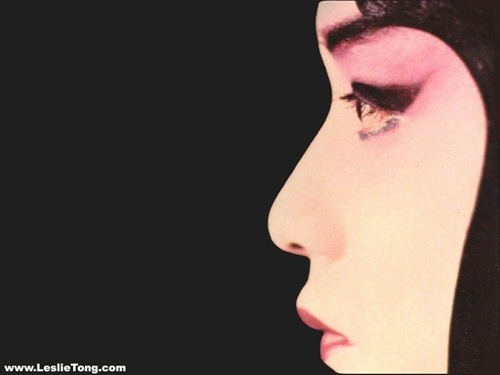
張國榮於霸王別姬片中的角色程蝶衣飾演楊玉環
Leslie Cheung as Yang Guei-Fei in Farewell My Concubine
Forever Enthralled is another film about Peking (Beijing) Opera by the critically acclaimed Chinese director Chen Kaige (best known for Farewell My Concubine). This time the film centres around the life of my Mr. Poetic Oneirism, the legendary Chinese opera artist Mei Lanfang. *Click here for a higher-resolution version, with subtitles in simplified Chinese (unfortunately no English at this time).
*Read more about 齊白石 (Qi Bai-Shi) here {in English} and here {in Chinese}. Master Qi is one of my parents' favourite artists, and I shall certainly write a separate blog post on him in the future. Or more appropriately perhaps, on the inspiration his life and his art have given me.
Let me not to the marriage of true minds Admit impediments. Love is not love Which alters when it alteration finds, Or bends with the remover to remove: O, no! it is an ever-fixed mark, That looks on tempests and is never shaken; It is the star to every wandering bark, Whose worth's unknown, although his height be taken. Love's not Time's fool, though rosy lips and cheeks Within his bending sickle's compass come; Love alters not with his brief hours and weeks, But bears it out even to the edge of doom. If this be error and upon me proved, I never writ, nor no man ever loved.
I think the reason why I love Svetlana Zakharova as a ballerina and find her dancing so entrancing and unique, above everything else, above her exquisite musicality, poetry, delicateness, gorgeous lines and tender beauty, is that she is regal. She exudes an aristocratic air in almost all her performances, in the best way imaginable. Seeing her dance on-stage is one of the most thriling experiences for me. Her Odette is pure poetry and music, her Odille intoxicating magic, her Giselle moves me to tears whilst her Nikiya literally takes my breath away. It is incredibly beautiful to be so absorbed in an artform, as it is one of the rare moments in daily life when one's aesthetic experience transcends ordinary consciousness to a higher, purer realm. (See also my old post Princess Odette of My Heart, on Svetlana's Swan Lake.)
In one of her 2003 interviews, when asked what she personally saw as her qualities which distinguished her from other dancers, she gave this answer after much hesitation (a truly modest ballerina and a perfectionist!):
"There's one thing which I usually do when I am onstage—I just open myself. I open up my heart. Every time when I am on stage, I keep telling myself, 'You have to give your heart and your soul to the audience!' And this is usually what I do when I am performing. I open up what I have in my heart. This is the exact opposite of what I do in my real life! I am always trying to hide my private life as much as possible."
And this is perhaps how she is able to move her audiences to tears, to make one hold his breath, and how she falls in love with every ballet that she dances—by opening up her heart.
This is my favourite variation of Nikiya in La Bayadère, where she performs the saddest, most heartbreaking dance at the princess's wedding to Solor, the man who swore eternal love to her in front of the sacred fire of the temple. Svetlana's painfully beautiful interpretation, together with the haunting music, make this my favourite rendition of Nikiya's death scene.
Also, I love the music and this solo of Princess Gamzatti. For me it is the counterpart of Nikiya's heartbreaking "death scene" variation. Whilst Svetlana is my favourite Nikiya, Darcey is my favourite Gamzatti, especially in this variation. In addition to Darcey's brilliant, effortless speed and precision, which adds something extraordinary to her beautifully musical movements in this slow and poetic adage (as if she was floating on air), I think what first attracted me in her rendition is the soft but clear demi-plié following her double pirouettes...
Nikiya (Svetlana) is dancing on the wedding of the man who swore eternal love to her in front of the sacred fire, to the princess of the kingdom. Imagine her heartbreak, sadness, humiliation and helplessness, being a mere temple dancer! Whereas Gamzatti, albeit a precious princess, also has her misfortune—she is married to (and in love with) a man whose only incentive to be with her is for her status and money, for what she has instead of who she is, and eventually she even dies from this cursed union. I find both dances to be highly entrancing and moving. Many classical ballets do touch upon the fundamental problems of human emotions and difficulties—their simplicity as well as complexity...
Darcey's brilliance lies in her speed and precision, and Svetlana (my favourite ballerina) is not unlike Maria Callas in that she has the ability to truly become the characters she's dancing - her musicality and poetry break my heart. Both of them are very lyrical in La Bayadere, in their own different ways.
Hands of Svetlana Zakharova, in La Fille du Pharaon.
I am overwhelmed with indescribable emotions again, after watching this short video clip of the film that "rocked my world" a long time ago... "霸王別姬" (Farewell My Concubine).
I think I fell in love with Leslie Cheung after watching "Farewell My Concubine," another one of my favourite cinematic treasures and probably the first film I felt so strongly about. My love affair with Chinese opera (both Beijing Opera and Kunqu) also started around that time. Since then I constantly dream of Chinese opera, like a stylised and quiet painting depicting exquisite landscapes decorated with tiny delicate jewels, presenting a mixture of its music, singing, movements, costumes, make-up, lyrics, a kaleidoscope of colours and beautiful narratives.
I still remember going to the cinema with my dad when "Farewell My Concubine" was first released - I was 13. I felt as if I was never going to be the same afterwards, and that I was so filled with something inexplicable that I could not allow anything else to enter my psyche for a while. Perhaps one of the definitions of a truly great film is that it gives the viewer a life-transforming, and sometimes out-of-body, experience.
Below is this beautiful video with Leslie Cheung singing the movie theme song, accompanied by some of the most gorgeous, intoxicating, as well as heartbreaking scenes from the film. I really must re-watch this gem one of these days.
張國榮, 著實地傾國傾城...
Ah, looking at Leslie now just makes me want to cry...
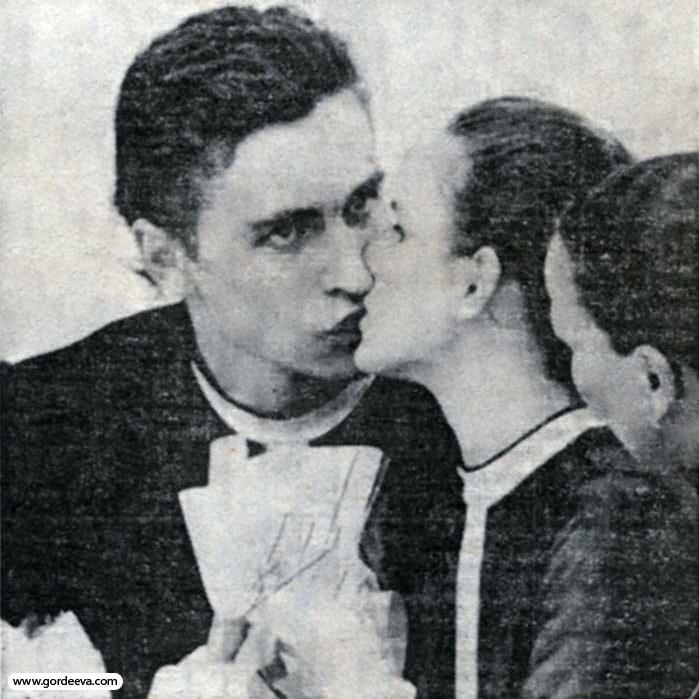
All of a sudden, out of the blue, I decided to look up the Russian figure skating husband-and-wife team Ekaterina Gordeeva and Sergei Grinkov, whom I discovered and loved years ago when I was in middle school. I found quite a few video clips of their beautiful 1993/1994 long programme (entitled 'Moonlight Sonata') set to Beethoven's Sonatas Moonlight and Pathétique. Back then it instantly caught my eyes. I fell in love with this unique performance and the very special couple, around the same time I encountered rhythmic gymnast Maria Petrova's beauty, soul and artistry (I have written a post on Maria Petrova before - Silk and Steel). For me, the aura, simplicity, harmony and elegance in their performance, are what distinguish them as artists in the field of competitive sports.
Long program (Moonlight Sonata) 1993-94 Choreography: Marina Zueva Music: Beethoven's Sonatas: "Pathetique" No.8 and "Moonlight" No.14 (Adagio & Allegretto) Performances: Skate Canada (Ottawa) 1993 Russian Championships (Saint Petersburg) 1994 European Championships (Copenhagen Denmark) 1994 XVII Winter Olympics (Lillehammer Norway) 1994
*Read more about Ekaterina Gordeeva & Sergei Grinkov here.
“동짓달 기나긴 밤을...” 동짓달 기나긴 밤을 한 허리를 버혀 내어 춘풍 니불 아래 서리서리 넣었다가 어론님 오신 날 밤이어든 굽이굽이 펴리라 Oh that I might capture the essence of this deep midwinter night And fold it softly into the waft of a spring-moon quilt, Then fondly uncoil it the night my beloved returns. “청산리 벽계수(靑山裏 碧溪水)야...” 靑山裏碧溪水 (청산리벽계수) 莫誇易移去 (막과이이거) 一到滄海不復還 (일도창해부복환) 明月滿空山 (명월만공산) 暫休且去奈何 (잠휴차거나하) 청산리 벽계수(靑山裏 碧溪水)야 수이 감을 자랑 마라. 일도창해(一到滄海)하면 다시 오기 어려우니 명월(明月)이 만공산(滿空山)할 제 쉬어간들 어떠리. Respectable Byuk Kye-Soo, do not boast of leaving so early. When you venture out to the sea, it will be difficult to return. The full bright moon above the empty mountain, how about staying here to rest.
(*Two sijo attributed to Hwang, translated by Larry Gross, via)
Hwang Jin-i (1520c.-1560c.), also known by her gisaeng name Myeongwol (literally bright moon), is one of the most famous gisaeng of the Joseon Dynasty who lived during the reign of King Jungjong. She was noted for her exceptional beauty, charming quick wit, and extraordinary intellect. Her personal life has become almost myth-like, having inspired movies, a 2006 TV series, operas, and numerous novels. Due to her renowned assertive and independent nature, she has become a modern popular cultural icon of Korea.
Although only a handful of sijo and geomungo pieces exist today, they nonetheless show skilled craftsmanship of words and of musical arrangement. Her sijo often describe the natural beauty of Gaeseong and its famous sites such the palace of Manwoldae and the Pakyon Falls. Others hint at the tragedy of her lost loves. Some are also responses to numerous famous classic Chinese poems and literature, the majority of them reflecting on lost love.
Wie lange noch? - the song (and ballet) that made me fall in love with Kurt Weill's music. I later discovered Teresa Stratas' album "The Unknown Kurt Weill" whilst searching for Wie lange noch? and enjoyed her interpretation as well as many other Weill songs...
I will confess there was a night when I willingly gave myself to you. You took me and drove me out of my mind. I believed that I could not live without you. You promised me blue skies, and I cared for you like my own father. You tormented me -- you tore me apart. I would have put the world at your feet! Look at me. When will the day come that I will be able to tell you: it's over. When that day comes... I dread it. How much longer? How long?
I believed you. I was in a daze from all your talk and your promises. I did whatever you wanted. Wherever you wanted to go, I was willing to follow. You promised me blue skies, and I -- Ah! I didn't even dare to cry. But you have broken your word and your vows. I have been silent and tortured myself. Look at me! When will the day come that I will be able to tell you: it's over. When that day comes -- I dread it. How much longer? How long?
Kurt Weill’s “Wie Lange Noch,” with an enigmatic text by his fellow German-Jewish emigré Walter Mehring, was written for broadcast behind enemy lines on Radio Free Europe during the Second World War. Reworking a tune he had set previously to a French text, in“Wie Lange Noch,” Weill speaks of lost trust and the betrayal of a man who had promised and inspired a nation with dreams of hope in the guise of a torch song. The sparse opening begins with a painfully beautiful duet between Julie Baumgartel (violin) and Paul Pulford (cello), which is marked by starkness and quiet desperation. With the change in tonality from minor to major, a sense of light and hope glimmers in the distant future. The accordion here becomes musical portrayal of a sorrowful memory while the intensity of this text explodes in the questioning of time, as Mehring desperately asks: Wie lange noch—how much longer. The underlying meaning of the words cannot possibly have been lost on Germans listening to this song in 1944.
I am in love... Such a Princess Aurora simply does not exist in the ballet world nowadays. Wish I could see Dame Margot Fonteyn dancing The Sleeping Beauty on stage. And this DVD (if it is released as one at all) is a must-find/must-have for me!
Margot Fonteyn as Aurora in Tchaikovsky's Sleeping Beauty, choreographed by Marius Petipa at Covent Garden theatre, photo Houston Rogers. London, England, c.1960 {via V&A}
Margot Fonteyn's tutu from Act I of The Sleeping Beauty 1946, designed by Oliver Messel
"How to put something so visual, so potent with theatrical moment that even film cannot capture it, into plain words? How to explain why it is that when, to a particular strain of music, an ordinary mortal steps forward on one leg, raises the other behind her and lifts her arms above her head, the angels hold their breath?"
(from the prologue of Margot Fonteyn, by Meredith Daneman)
*See also here for Margot's Entrance of Aurora & Rose Adagio...
I recently came across the work of photographer and artist Nadav Kander, and was instantly drawn to his Yangtze River series of photographs. There is an intense, yet ethereal, layer of loneliness and quiet poetry in the vast space depicted in these images. Loneliness particularly in the emptiness, colour scheme, and feeling of displaced human condition/ disconnectedness with nature for the people living along the river. Quietness albeit the industrial development which is clearly in progress along the Long River of China, shown in these photographs. Curiously and alluringly, instead of the peacefulness and tranquillity that is often associated emotionally with vast, empty spaces (here Kander echoes beautifully with the Chinese aesthetic concept of 留白 liu bai—literally “leaving blank”), one senses unrest and unease, which perhaps fuels certain undercurrent revolution. As Peter Nitsch puts it, “River is the metaphor for constant change.”
Nanjing IV, Jiangsu Province
Mouth I (Wusongkou, where river meets sea), near Shanghai
Three Gorges Dam II, Yichang, Hubei Province
Changxing Island I (Island of Oranges), Shanghai
Mouth IV, near Shanghai
Three Gorges Dam V, Yichang, Hubei Province
Wu Gorge, Hubei Province
Xiling Gorge I, Hubei Province
Xiling Gorge IV, Hubei Province
New Fengdu (looking at Old Fengdu), Chongqing Municipality
Chongqing XI, Chongqing Municipality
Qinghai Province II
Qinghai Province III
(all images from Nadav Kander's official website)
*Read more about Nadav Kander's Long River Serieshere and here.
These photographs somehow remind me of the beauty of loneliness, and a paradoxical sense of agitation which unfurl in Ravel's Tzigane, performed here by one of my favourite violinists Henryk Szeryng.
In Xanadu did Kubla Khan A stately pleasure-dome decree: Where Alph, the sacred river, ran Through caverns measureless to man Down to a sunless sea. So twice five miles of fertile ground With walls and towers were girdled round: And here were gardens bright with sinuous rills, Where blossomed many an incense-bearing tree; And here were forests ancient as the hills, Enfolding sunny spots of greenery.
But oh! that deep romantic chasm which slanted Down the green hill athwart a cedarn cover! A savage place! as holy and enchanted As e'er beneath a waning moon was haunted By woman wailing for her demon-lover! And from this chasm, with ceaseless turmoil seething, As if this earth in fast thick pants were breathing, A mighty fountain momently was forced: Amid whose swift half-intermitted burst Huge fragments vaulted like rebounding hail, Or chaffy grain beneath the thresher's flail: And 'mid these dancing rocks at once and ever It flung up momently the sacred river. Five miles meandering with a mazy motion Through wood and dale the sacred river ran, Then reached the caverns measureless to man, And sank in tumult to a lifeless ocean: And 'mid this tumult Kubla heard from far Ancestral voices prophesying war!
The shadow of the dome of pleasure Floated midway on the waves; Where was heard the mingled measure From the fountain and the caves. It was a miracle of rare device, A sunny pleasure-dome with caves of ice!
A damsel with a dulcimer In a vision once I saw: It was an Abyssinian maid, And on her dulcimer she played, Singing of Mount Abora. Could I revive within me Her symphony and song, To such a deep delight 'twould win me,
That with music loud and long, I would build that dome in air, That sunny dome! those caves of ice! And all who heard should see them there, And all should cry, Beware! Beware! His flashing eyes, his floating hair! Weave a circle round him thrice, And close your eyes with holy dread, For he on honey-dew hath fed, And drunk the milk of Paradise.
*Poetry: Kubla Khan (A Vision in A Dream) by Samuel Taylor Coleridge, completed in 1797 and published in 1816. *Melody: String Sextet in D minor, "Souvenir de Florence," Op.70, by Pyotr Ilyich Tchaikovsky, composed in 1890. This piece is used in James Kudelka's 1994 ballet Cruel World. *Image: Holograph copy of Kubla Khan, via Wikipedia.