Thursday, 5 August 2010

Taipei: My City, My Home (updated)

Points of Interest in Taipei:
old houses, scholars’ dens, art spaces, tea culture & gardens etc.

Taipei is by far one of the most dynamically artistic and cultural cities in the world, with its own distinctive and profound heritage. I have compiled a list of places of interest in this wonderful city where I grew up and am becoming more and more fond of.

*This post is being constantly updated - please check back often. Also, most websites/links have an English and/or Japanese version, so do click away and explore!*


滿溢著藝術氣息的師大夜市一隅


《學者故居》 Scholars' Dens

林語堂故居 The Lin Yutang House (台北市仰德大道二段141號, Tel: 02-2861-3003) *See a beautiful photo album of Lin Yutang's residence.
殷海光故居 Yin Foo-Sun's Residence (臺北市大安區溫州街18巷16弄一之一號) {A good blog/reference site of many interesting old buildings}
李國鼎故居 Li Guo-Ding's Residence (臺北市中正區泰安街2巷3號, Tel: 02-2393-5991 要先預約) See also here.
錢穆故居 The Ch'ien Mu House (臺北市士林區臨溪路72號, Tel: 02-2880-5809)
嚴家淦故居 Yen Jia-Gan Residence (台北市中正區重慶南路二段2號、4號) *目前暫不開放參觀


溫州街小巷, 近殷海光學者故居


《老建築》 Old Buildings and Houses

台北賓館 Taipei Guest House (台北市凱達格蘭大道); 參觀資訊 http://tgh.mofa.gov.tw/ {Great photography on this blog.}
撫臺街洋樓 (台北市延平南路26號, Tel: 02-2314-5190) - No official website, but here's a wonderful blog full of info on old buildings.
市長官邸藝文沙龍 The Mayor's Residence Arts Salon (台北市徐州路46號, Tel: 02-2396-8198)
台北市中山堂 (臺北市延平南路98號, Tel: 02-2381-3137)
西門紅樓 The Red House (台北市萬華區成都路10號, Tel: 02-2311-9380)
牯嶺街小劇場 (台北市中正區牯嶺街5 巷2 號, Tel: 02-2391-9393)
台北故事館 Taipei Story House (台北市中山北路三段181-1號, Tel: 02-2596-1898)
台北之家/ 光點台北 Taipei House/ Spot Taipei (台北市中山北路二段18號, Tel: 02-2511-7786)
朝北醫院 (台北市萬華區西園路一段181號) *目前只能看外觀
古城老街區 (台北市中正區延平南路)
臺北縣立淡水古蹟博物館 Dansui Historic Sites, Taipei County (臺北縣淡水鎮中正路28巷1號, Tel:02 2623 1001)
北投溫泉博物館 Beitou Hotspring Museum (臺北市北投區中山路二號, Tel: 02-2893-9981)
台灣民俗北投文物館 Taiwan Folk Arts Museum (臺北市北投區幽雅路32號, Tel: 02-2891-2318)
吟松閣老溫泉旅館 (台北市北投區幽雅路21號, Tel: 02-28912063)
《玫瑰古蹟》蔡瑞月舞蹈研究社 Tsai Jui-Yueh Dance Institute (臺北市中山北路二段48巷10號, Tel: 02-2523-7547)
*士林官邸 (台北市福林路60號, {士林區中山北路5段460巷1號, 福林路口東南側}, Tel: 02-2881-2512, 02-2881-2912) Where the annual chrysanthemum exhibition is held: 士林官邸菊展.


殷海光故居門口


《博物館/藝廊/表演藝術中心》 Museums, Galleires & Spaces for Performance Arts

國立歷史博物館 National Museum of History (臺北市南海路49號, Tel: 02-2361-0270) *新網頁好美; 記得順道參觀植物園
國立台灣博物館 National Taiwan Museum (臺北市中正區100襄陽路2號, 二二八和平公園內; 02-2382-2699)
紀州庵新館 (台北市中正區同安街107號, Tel: 02-2364-0651)
上古藝術館 Sogo Art (台北市建國南路一段160號B1, 忠孝東路口; Tel: 02-2711-3577)
佛光緣美術館 Fo Guang Yuan Art Gallery (台北市信義區松隆路327號十樓之一, Tel: :02-2760-0222)
楊英風美術館 Yu Yu Yuan Museum (台北市重慶南路二段31號, Tel:02-23961966)
岩筆模 MBmore (台北市捷運中山站地下書街B39, 近R9出口)
南海藝廊 Nanhai Gallery, National Taipei University of Education (台北市重慶南路二段19巷3號, Tel: 02-2392-5080)
台北戲棚 Taipei Eye (台北市中山北路二段113號, 錦州街入口; Tel: 02-2568-2677)
台北偶戲館 Puppetry Art Centre of Taipei (台北市松山區市民大道五段99號2樓, Tel: 02-2528-9553)
台北市立美術館 Taipei Fine Arts Museum (臺北市中山北路三段181號, Tel: 02 25957656)
台北當代藝術館 Museum of Contemporary Art Taipei (台北市大同區長安西路39號, Tel: 02-2552-3721轉301)
瑩瑋藝術翡翠文化博物館 Museum of Jade Art (臺北市104中山區建國北路一段96號1樓)
台北服飾文化館 Taipei Costume and Culture Centre (台北市萬華區西園路二段9號, Tel: 02-2304-4088)
中正紀念堂展場 National Chiang Kai-Shek Memorial Hall
國父紀念館展場 (國父史蹟紀念館) National Dr. Sun Yat-Sen Memorial Hall
兩廳院: 國家戲劇院/ 國家音樂廳 National Theatre & Concert Hall
國立故宮博物院 National Palace Museum, Taipei (Always worth a visit, in any case...)
市長官邸藝文沙龍 The Mayor's Residence Arts Salon (台北市徐州路46號, Tel:02-2396-8198)
臺北縣立鶯歌陶瓷博物館 Taipei County Yingge Ceramics Museum (台北縣鶯歌鎮文化路200號, Tel: 02-8677-2727)
華山1914創意文化園區 Huashan 1914 Creative Park (台北市中正區八德路一段1號/ Tel: 02-2358-1914)
草山國際藝術村 Grass Mountain Artist Village (台北市北投區湖底路92 號, Tel:02-2862-2404)
台北國際藝術村 Taipei Artist Village (台北市北平東路7號, Tel:02-3393-7377)
凱達格蘭文化館 Ketagalang Culture Centre (台北市北投區中山路3-1號/ Tel: 02-2898-6500)
梅庭 The Plum Garden, Beitou (台北市北投區中山路6號, Tel: 02-2897-2647)
表演36房 Performing Arts School 36 (台北市文山區木新路二段156之1號, Tel: 02-2939-3088)
芝山文化生態綠園 Zhishan Cultural and Ecological Garden (台北市雨聲街120號, Tel: 02-8866-6258)
臺北市電影主題公園 Taipei Cinema Park (臺北市康定路19號, Tel: 02-2312-3717)
台北數位藝術中心 Digital Art Centre, Taipei (台北市士林區福華路180號, Tel: 02-7736-0708)
台北探索館 Discovery Centre of Taipei (臺北市市府路一號, Tel: 1999 {外縣市 02-27574547} 轉4547)

*Below four outside Taipei ~
國立台灣文學館 National Museum of Taiwanese Literature (台南市中西區中正路1號, Tel: 06-221-7201)
國立台灣美術館 (台中市西區五權西路一段2號, Tel: 04-2372-3552)
泰郁美學堂 Taiyu Beaux Arts Salon (嘉義市600大雅路二段452號, Tel: 05-278 5864)
國立傳統藝術中心 Centre for Traditional Arts (宜蘭縣五結鄉季新村五濱路二段201號, Tel: 03-970-5815). Two lovely exhibitions - 情結古今蝶戀花: 明&愚編飾創作展 "An Encounter with Colourful Butterflies and Flowers: Ming & Yu Design Collection" {see also 珠寶設計 古玩生香 Ming & Yu Jewellery Design}; 路轉青山巧手遇: 傳藝刺繡特展 "An Encounter with Ingenious Hands: A Special Exhibition of Traditional Embroidery."


Spot Taipei 光點/台北之家 is the former residence of the American ambassador to Taiwan (long long ago...), now an hauteur/art cinema, bookstore & cafe in one. David and I adore the al fresco cafe - ah, the resplendence of trees...

溫州街巷弄裡的殷海光學者故居


《品茗》 Tea Culture/ Teahouses

小慢 Xiaoman (台北市泰順街16巷39號, Tel: 02 2365 0017) - It immediately became my favourite teahouse in Taipei after only one tea session, perhaps even in the whole world. One of the most beautiful places in Taipei, and so close to where I live! (See more photos & Facebook page...)
紫藤廬 Wisteria House (台北市新生南路三段16巷1號, Tel:02 2363 7375 & 02-2363 9459); see also the Facebook official page of Wisteria House.
爾雅書馨一庭之廣生食品行 (台北市泰順街38巷25號, Tel:02 2363 3414) - Reminiscent of the nostalgic old Shanghai, visiting this teahouse is always on our to-do list whenever David and I come to Taipei. The owner used to have a fascinating and gorgeous antique shop nearby, where we discovered loads of treasures, but it seems to have closed down. Click here and here for more photos and information (in Chinese).
紅樓茶坊 Cho West Cha at The Red House Theatre (台北市萬華區成都路10號, Tel: 02-2311-9380)
撫臺街洋樓「午後茶韻」 (台北市延平南路26號, Tel: 02-2314-5190)
布拉格 There's No Place Like Café Prague (台北市泰順街40巷30號, Tel: 02 2369 7722)
明星咖啡館 Astoria Café (台北市中正區武昌街一段7號2樓, Tel: 02 2381 5589)
中山堂堡壘咖啡 Fortress Café (台北市延平南路98號2樓, Tel: 02 2381 3137)
二條通 綠島小夜曲 The Island (台北市中山北路1段33巷1號, Tel: 02 2531 4594)
采采食茶文化 Cha Cha Thé (台北市復興南路一段219巷23號, Tel: 02 8773 1818/ 台北市敦化南路一段132號, Tel: 02 8773 5838)
老樹咖啡 Oldtree Café (台北市中正區新生南路一段60號, Tel: 02 2351 6463)
朵兒咖啡館 Daughters' Café (台北市松山區富錦街393號, Tel: 02 8787 2425)

《Reference Websites》

台北市古典建築
台灣古蹟列表 (on Wikipedia)
台灣美術館及博物館
台北市政府文化局 Department of Cultural Affairs, Taipei City Government
文化快遞 Taipei Culture Express
文化資產 Taipei Cultural Heritage Sites
*藝遊網*
台北旅遊網 Taipei Travel Net
節氣與農諺 {臺灣節慶之美}
2010 臺北古蹟日 ~ 花現臺北城 嬉遊古蹟
國立臺灣工藝研究發展中心 National Taiwan Craft Research and Development Institute (南投縣542草屯鎮中正路573號, Tel:049-233-4141)
AIR Taipei 藝術進駐
學學文創志業 Xue Xue Institute (台北市內湖區堤頂大道二段207號, Tel:0800-068-089)


*Musical landscapes for this post - Igor Stravinsky's Agon.

Tuesday, 20 July 2010

無題 (ii)


(Photo via Stacey)


O Man! Take heed!
What says the deep midnight?
"I slept, I slept—,
from a deep dream have I awoken:—
the world is deep,
...and deeper than the day has thought.
Deep is its pain—,
joy—deeper still than heartache.
Pain says: Pass away!
But all joy
seeks eternity—,
—seeks deep, deep eternity!"

~ From Gustav Mahler: Symphony No. 3 (4. Sehr langsam. Misterioso)


Intermezzo from the opera Manon Lescaut by Giacomo Puccini
Herbert von Karajan and Wiener Philharmoniker


Giacomo Puccini: Intermezzo from the opera Suor Angelica


Friday, 18 June 2010

Hands


In celebration of my infatuation with hands, I have compiled some photographs which I find infinitely beautiful and mesmerising. As a pianist and lover of Chinese opera, hands are to me the most sensual, mysterious and magical part of a human body. They are also the most “narrative.”

Stephen Deutch: Potter's Hands, Vintage Gravure
Rudolf Koppitz (1884-1936), Hand Studie, ca. 1920, Bromoil print (image via)

my hands
吻。


The tree from whose flower
This perfume comes
Is unknowable.
~Matsuo Basho (1644-1694)


A sculpture at the Musée Rodin, Paris, France. (*via)
Pierre Choumoff, The Hand of God in bronze at the Carnegie Institute, Pittsburgh
La Main de Dieu [by Rodin], c.1915, silver gelatin print (c.1915)


“When the spirit flows from the hands, it is called 'labour.' From nothing, the hands start to create wonderful works of art. The hands are the exit of the spirit. The movement of the hands embodies human longings and human beings are formed by the work of the hands. The hands create forms that never existed before, and this art of creation is uniquely human. That is, human hands carve an image of the individual out of vacant space. Humans recognise the level of their own spirit by looking at what they have created with their hands. That is, the hands enable the spirit to emerge as works of art, and it will reflect what is in your heart. As a result, what is in your heart shows in your work, and the hands will reflect what level you are, sometimes joyfully, sometimes sadly.” 

~Late Master in Japanese embroidery, Iwao Saito


“Female hands” Anna Penagini, by Emilio Sommariva, 1935


Takamatsu Jiro, Shadow No. 1413 (*image via)

“From within this giant junkyard where all things are corroding and crumbling, what will capture us, pull us up, flush us out, rescue us from our bloated languidity, will never be these things themselves. It can only and always be found in the faint light of the world to come, in possibility, or probability, indeterminacy, lack, and all the others that only ‘are' in absence.” ~Takamatsu Jiro, 1964

How To Sleep: With forearm tensed, model shows relaxed way of dropping hand, 
by Gjon Mili, New York, 1943

How To Sleep: With forearm tensed model shows tense way of dropping hand, 
by Gjon Mili, New York, 1943

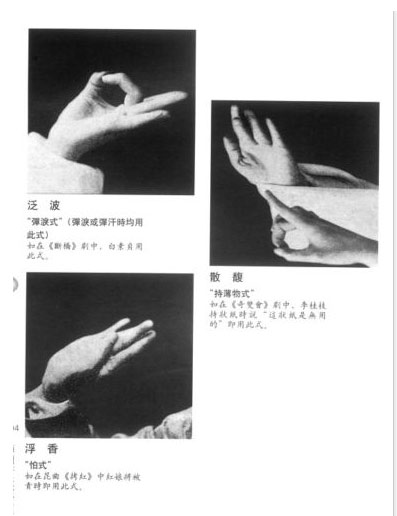
梅蘭芳手指尖上的傾國傾城 {via}
Hand Gestures of the Legendary Peking Opera Master Mei Lanfang 
(Mr. "Poetic Oneirism")

梅蘭芳手指尖上的傾國傾城 {via}
Hand Gestures of the Legendary Peking Opera Master Mei Lanfang 
(Mr. "Poetic Oneirism")

“蘭花指”之擺手式
Hand Gesture "Orchid Fingers" in Chinese Opera


Mei Lanfang's Hand Gestuality in Beijing (Peking) Opera


Book Negs, Casals, by Gjon Mili

Hand of Bassist Red Callender During Filming of Jammin' the Blues, by Gjon Mili

Pianist Clara Haskil's Hands {unknown image source}

Josef Hofmann's Hands in Action, by Gjon Mili, 1940

Film Still from "Late Spring" directed by Ozu Yasujiro

Hand of cellist Gregor Piatigorsky whilst playing Schubert
{film still via YouTube}

Jam Session: Hand of unident, bass player on the strings during jam session at photographer Gjon Mili's studio, by Gjon Mili, New York, 1943


Deborah Turbeville

The Graceful Hands of Ballerina Tilly Losch, by E. O. Hoppe, 1928 {via}

Close-up of woman's graceful hands (old print), by E. O. Hoppe, 
United Kingdom, 1925

Close-up of woman's graceful hands (old print), by E. O. Hoppe, 
United Kingdom, 1925

Sinuous and sensitive hands of artist Blair Leighton, by E. O. Hoppe, 
United Kingdom, 1920

Close-up of a woman's graceful hands with ring and necklace in foreground (old print), by E. O. Hoppe, United Kingdom, 1925

Tango {unknown image source}

Stroboscopic image of the hands of Russian conductor Efram Kurtz whilst conducting, by Gjon Mili

The Baton, by Gjon Mili

中國戲曲之手勢“蘭花指”
Various Hand Gestures of "Orchid Fingers" in Chinese Opera


Hands of Bresson: a visual essay on the tactile world of Robert Bresson created for the Criterion Collection, by kogonada. Music: Schubert, Piano Sonata No. 20, D. 959 (Au Hasard Balthazar).

Nicolas de Largillière (1656 – 1746), Portrait of a Woman, 1696 (detail)

Good Luck to My Friend, via coeXist


The Grand coda from La Fille du Pharaon:


Kim Yu-Na's hands in "Bond Girl," 2009


*Also watch Kim Yu-Na in her stunning long programme Scheherezade (2009 Figure Skating World Championships), a magical firebird on ice.


*All Gjon Mili and E. O. Hoppe images via the LIFE photo archive hosted by Google
**Thank you Photography Influences and Couleurs for introductions to Gjon Mili's How to Sleep photo and E. O. Hoppe's Close-up of woman's graceful hands respectively.

Wednesday, 16 June 2010

郎世寧 Giuseppe Castiglione


清 郎世寧 仙萼長春圖冊 聚瑞圖 局部 (畫心)

郎世寧 仙萼長春圖冊 荷花慈姑花圖 (畫心)
絹本設色 縱33.3厘米 横27.8厘米 台北故宫博物院藏


Giuseppe Castiglione(1688年7月19日-1766年7月16日),中國名郎世寧。意大利米蘭人。天主教耶穌會傳教士、中國宮廷畫家,以西洋寫實畫風紀錄了清朝初期的中國宮廷人物與景色。十九歲入天主教耶穌會為修士,習畫兼習建築。二十七歲來華傳教,後以繪事供奉朝廷,歷仕康熙、雍正、乾隆三朝。兼善人物、花卉、鳥獸;動物中,以馬畫最多,亦最傳神。

生平
郎世寧出生於義大利米蘭的聖馬塞蘭諾(San Marcellino),青年時期隨卡洛科納拉(Carlo Conara)學習繪畫與建築,並在1707年左右加入了熱那亞耶穌會。剛開始只為義大利的教堂畫壁畫,1714年居住於葡萄牙里斯本及科英布拉。幾年後對中國產生了相當大的興趣,1715年前往中國。期間曾於澳門學習中文、並以「郎世寧」作為漢名。

郎世寧在一生大半待在中國,歷侍康熙、雍正、乾隆三朝,計約有50餘年。1715年到中國時,被康熙帝以藝術家的身份召進宮中,曾協助圓明園的規劃設計,他引進西方文藝復興時期開創的明暗寫實畫法,並改用膠狀顏料在宣紙上作畫,也就是今日的膠彩畫作法,他曾試圖要求康熙帝開辦學習用西方透視原理來繪畫的繪畫學校,但不被採用,後來與中國學者年希堯一起出版了一本《視學》,是中國第一部透視學專著。


郎世寧 仙萼長春圖冊 牡丹圖
絹本設色 縱33.3厘米 横27.8厘米 台北故宫博物院藏

郎世寧 仙萼長春圖冊 芍藥圖
絹本設色 縱33.3厘米 横27.8厘米 台北故宫博物院藏


1757年,乾隆帝曾為郎世寧舉辦七十歲大壽,證明他在宮中頗受禮遇及恩寵。晚年亦為乾隆帝及其妃留下不少的肖像。最後官至三品的郎世寧于1766年在中國去世,再追封侍郎銜。享年78歲。葬於滕公柵欄。

在他之後的西洋傳教士畫家有王致誠(Jean Denis Attiret)、艾啟蒙(Ignaz Sichelbarth)、賀清泰(Louis dePoirot)、潘廷章(Giuseppe Panzi)等。

今日郎世寧的畫作在中國畫拍賣市場中是相當高價的作品,2000年他的《蘋野秋鳴》賣出價是1765.5萬港幣,是當時第二高價賣出的中國畫。


清 郎世寧 仙萼長春圖冊 石竹圖 (畫心)
絹本設色 縱33.3厘米 横27.8厘米 台北故宫博物院藏

郎世寧 仙萼長春圖冊 菊花圖
絹本設色 縱33.3厘米 横27.8厘米 台北故宫博物院藏

郎世寧 仙萼長春圖冊 虞美人與蝴蝶花圖
絹本設色 縱33.3厘米 横27.8厘米 台北故宫博物院藏


傳教
郎世寧雖然以傳教士的身份來中國,但在康熙、雍正、乾隆三代對基督宗教的壓制中,他並沒有被逐出紫禁城,反而極受禮遇,有很大一部分的原因是,他在清朝宮中僅有宮廷畫師的職位,凡是有任何企圖傳教的舉止,都會被禁止,因此在中國,多稱他為宮廷畫師,而少稱他為傳教士。

代表作品
郎世寧的代表作品有《八駿圖》、《聚瑞圖》、《嵩獻英芝圖》、《大閱圖》、《百駿圖》、《弘曆及後妃像》、《平定西域戰圖》等。後世藝評家認為他畫馬最為傳神。

參看
蘇立群,《郎世寧傳》(1998年由中國文學出版社出版;2004年,中國作家出版社以《宮廷畫師郎世寧》名重新出版)


【名稱】清 郎世寧 聚瑞圖 【年代】清代
【簡介】立軸,絹本,設色,縱109.3厘米,橫58.7厘米。上海博物館藏。


Giuseppe Castiglione was born on July 19, 1688, in the central San Marcellino district of Milan, Italy, the site of a renowned Botteghe degli Stampator painting studio. As a youth, Castiglione learned to paint from Carlo Cornara at the studio, and he also came under the influence of the famous painter Andrea Pozzo, a member of the Society of Jesus at Trento. In 1707, at the age of 19, Castiglione formally entered the Society and traveled to the prosperous city of Genoa for further training. By this time, he had already achieved some repute as a painter and was invited to do wall paintings at Jesuit churches. At the age of 27, he received instructions to go to China, and, on the journey, did wall paintings in Jesuit churches in Coimbra (Portugal) and Macao. Castiglione's style was based on the emphasis on color, perspective, and light found in Italian Renaissance art. In China, where Castiglione went by the Chinese name Lang Shih-ning, he came to the attention of the Ch'ien-lung emperor (r. 1736-1795) and served as an artist for the court. Castiglione eventually became a respected painter and earned the appreciation of the Ch'ien-lung emperor, which was a considerable honor for a foreign artist at the time.


清 郎世寧 仙萼長春圖冊 聚瑞圖


Following the taste and tradition of painting in China, Castiglione was able to forge a new style that combined elements with his Western training in art. His paintings were done with Chinese materials but often incorporate Western techniques of shading and atmospheric perspective. (...) Using perspective to suggest depth and shading for the effect of light, Castiglione has used Chinese materials and Western techniques to impart a sense of realism to this native theme. In addition to the shadows, Castiglione has adapted the traditional texture stroke methods of Chinese painting to give the objects even more substance. The emphasis on washes of color, however, still reveals the focus on native techniques. This painting [One Hundred Horses - see link], done in 1728, represents an early masterpiece in Castiglione's syncretic style of East and West.

{Text via: National Palace Museum, Taipei, Taiwan}


郎世寧 仙萼長春圖冊 罌粟圖
絹本設色 縱33.3厘米 横27.8厘米 台北故宫博物院藏

郎世寧 仙萼長春圖冊 桃花圖
絹本設色 縱33.3厘米 横27.8厘米 台北故宫博物院藏


*To see and read more...
郎世寧宮廷畫欣賞
郎世寧 仙萼長春圖冊賞析
Related Posts Plugin for WordPress, Blogger...