Friday, 18 June 2010

Hands


In celebration of my infatuation with hands, I have compiled some photographs which I find infinitely beautiful and mesmerising. As a pianist and lover of Chinese opera, hands are to me the most sensual, mysterious and magical part of a human body. They are also the most “narrative.”

Stephen Deutch: Potter's Hands, Vintage Gravure
Rudolf Koppitz (1884-1936), Hand Studie, ca. 1920, Bromoil print (image via)

my hands
吻。


The tree from whose flower
This perfume comes
Is unknowable.
~Matsuo Basho (1644-1694)


A sculpture at the Musée Rodin, Paris, France. (*via)
Pierre Choumoff, The Hand of God in bronze at the Carnegie Institute, Pittsburgh
La Main de Dieu [by Rodin], c.1915, silver gelatin print (c.1915)


“When the spirit flows from the hands, it is called 'labour.' From nothing, the hands start to create wonderful works of art. The hands are the exit of the spirit. The movement of the hands embodies human longings and human beings are formed by the work of the hands. The hands create forms that never existed before, and this art of creation is uniquely human. That is, human hands carve an image of the individual out of vacant space. Humans recognise the level of their own spirit by looking at what they have created with their hands. That is, the hands enable the spirit to emerge as works of art, and it will reflect what is in your heart. As a result, what is in your heart shows in your work, and the hands will reflect what level you are, sometimes joyfully, sometimes sadly.” 

~Late Master in Japanese embroidery, Iwao Saito


“Female hands” Anna Penagini, by Emilio Sommariva, 1935


Takamatsu Jiro, Shadow No. 1413 (*image via)

“From within this giant junkyard where all things are corroding and crumbling, what will capture us, pull us up, flush us out, rescue us from our bloated languidity, will never be these things themselves. It can only and always be found in the faint light of the world to come, in possibility, or probability, indeterminacy, lack, and all the others that only ‘are' in absence.” ~Takamatsu Jiro, 1964

How To Sleep: With forearm tensed, model shows relaxed way of dropping hand, 
by Gjon Mili, New York, 1943

How To Sleep: With forearm tensed model shows tense way of dropping hand, 
by Gjon Mili, New York, 1943

梅蘭芳手指尖上的傾國傾城 {via}
Hand Gestures of the Legendary Peking Opera Master Mei Lanfang 
(Mr. "Poetic Oneirism")

梅蘭芳手指尖上的傾國傾城 {via}
Hand Gestures of the Legendary Peking Opera Master Mei Lanfang 
(Mr. "Poetic Oneirism")

“蘭花指”之擺手式
Hand Gesture "Orchid Fingers" in Chinese Opera


Mei Lanfang's Hand Gestuality in Beijing (Peking) Opera


Book Negs, Casals, by Gjon Mili

Hand of Bassist Red Callender During Filming of Jammin' the Blues, by Gjon Mili

Pianist Clara Haskil's Hands {unknown image source}

Josef Hofmann's Hands in Action, by Gjon Mili, 1940

Film Still from "Late Spring" directed by Ozu Yasujiro

Hand of cellist Gregor Piatigorsky whilst playing Schubert
{film still via YouTube}

Jam Session: Hand of unident, bass player on the strings during jam session at photographer Gjon Mili's studio, by Gjon Mili, New York, 1943


Deborah Turbeville

The Graceful Hands of Ballerina Tilly Losch, by E. O. Hoppe, 1928 {via}

Close-up of woman's graceful hands (old print), by E. O. Hoppe, 
United Kingdom, 1925

Close-up of woman's graceful hands (old print), by E. O. Hoppe, 
United Kingdom, 1925

Sinuous and sensitive hands of artist Blair Leighton, by E. O. Hoppe, 
United Kingdom, 1920

Close-up of a woman's graceful hands with ring and necklace in foreground (old print), by E. O. Hoppe, United Kingdom, 1925

Tango {unknown image source}

Stroboscopic image of the hands of Russian conductor Efram Kurtz whilst conducting, by Gjon Mili

The Baton, by Gjon Mili

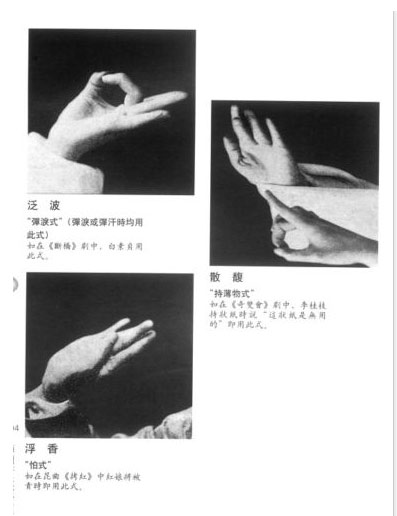
中國戲曲之手勢“蘭花指”
Various Hand Gestures of "Orchid Fingers" in Chinese Opera


Hands of Bresson: a visual essay on the tactile world of Robert Bresson created for the Criterion Collection, by kogonada. Music: Schubert, Piano Sonata No. 20, D. 959 (Au Hasard Balthazar).

Nicolas de Largillière (1656 – 1746), Portrait of a Woman, 1696 (detail)

Good Luck to My Friend, via coeXist


The Grand coda from La Fille du Pharaon:


Kim Yu-Na's hands in "Bond Girl," 2009


*Also watch Kim Yu-Na in her stunning long programme Scheherezade (2009 Figure Skating World Championships), a magical firebird on ice.


*All Gjon Mili and E. O. Hoppe images via the LIFE photo archive hosted by Google
**Thank you Photography Influences and Couleurs for introductions to Gjon Mili's How to Sleep photo and E. O. Hoppe's Close-up of woman's graceful hands respectively.

Wednesday, 16 June 2010

郎世寧 Giuseppe Castiglione


清 郎世寧 仙萼長春圖冊 聚瑞圖 局部 (畫心)

郎世寧 仙萼長春圖冊 荷花慈姑花圖 (畫心)
絹本設色 縱33.3厘米 横27.8厘米 台北故宫博物院藏


Giuseppe Castiglione(1688年7月19日-1766年7月16日),中國名郎世寧。意大利米蘭人。天主教耶穌會傳教士、中國宮廷畫家,以西洋寫實畫風紀錄了清朝初期的中國宮廷人物與景色。十九歲入天主教耶穌會為修士,習畫兼習建築。二十七歲來華傳教,後以繪事供奉朝廷,歷仕康熙、雍正、乾隆三朝。兼善人物、花卉、鳥獸;動物中,以馬畫最多,亦最傳神。

生平
郎世寧出生於義大利米蘭的聖馬塞蘭諾(San Marcellino),青年時期隨卡洛科納拉(Carlo Conara)學習繪畫與建築,並在1707年左右加入了熱那亞耶穌會。剛開始只為義大利的教堂畫壁畫,1714年居住於葡萄牙里斯本及科英布拉。幾年後對中國產生了相當大的興趣,1715年前往中國。期間曾於澳門學習中文、並以「郎世寧」作為漢名。

郎世寧在一生大半待在中國,歷侍康熙、雍正、乾隆三朝,計約有50餘年。1715年到中國時,被康熙帝以藝術家的身份召進宮中,曾協助圓明園的規劃設計,他引進西方文藝復興時期開創的明暗寫實畫法,並改用膠狀顏料在宣紙上作畫,也就是今日的膠彩畫作法,他曾試圖要求康熙帝開辦學習用西方透視原理來繪畫的繪畫學校,但不被採用,後來與中國學者年希堯一起出版了一本《視學》,是中國第一部透視學專著。


郎世寧 仙萼長春圖冊 牡丹圖
絹本設色 縱33.3厘米 横27.8厘米 台北故宫博物院藏

郎世寧 仙萼長春圖冊 芍藥圖
絹本設色 縱33.3厘米 横27.8厘米 台北故宫博物院藏


1757年,乾隆帝曾為郎世寧舉辦七十歲大壽,證明他在宮中頗受禮遇及恩寵。晚年亦為乾隆帝及其妃留下不少的肖像。最後官至三品的郎世寧于1766年在中國去世,再追封侍郎銜。享年78歲。葬於滕公柵欄。

在他之後的西洋傳教士畫家有王致誠(Jean Denis Attiret)、艾啟蒙(Ignaz Sichelbarth)、賀清泰(Louis dePoirot)、潘廷章(Giuseppe Panzi)等。

今日郎世寧的畫作在中國畫拍賣市場中是相當高價的作品,2000年他的《蘋野秋鳴》賣出價是1765.5萬港幣,是當時第二高價賣出的中國畫。


清 郎世寧 仙萼長春圖冊 石竹圖 (畫心)
絹本設色 縱33.3厘米 横27.8厘米 台北故宫博物院藏

郎世寧 仙萼長春圖冊 菊花圖
絹本設色 縱33.3厘米 横27.8厘米 台北故宫博物院藏

郎世寧 仙萼長春圖冊 虞美人與蝴蝶花圖
絹本設色 縱33.3厘米 横27.8厘米 台北故宫博物院藏


傳教
郎世寧雖然以傳教士的身份來中國,但在康熙、雍正、乾隆三代對基督宗教的壓制中,他並沒有被逐出紫禁城,反而極受禮遇,有很大一部分的原因是,他在清朝宮中僅有宮廷畫師的職位,凡是有任何企圖傳教的舉止,都會被禁止,因此在中國,多稱他為宮廷畫師,而少稱他為傳教士。

代表作品
郎世寧的代表作品有《八駿圖》、《聚瑞圖》、《嵩獻英芝圖》、《大閱圖》、《百駿圖》、《弘曆及後妃像》、《平定西域戰圖》等。後世藝評家認為他畫馬最為傳神。

參看
蘇立群,《郎世寧傳》(1998年由中國文學出版社出版;2004年,中國作家出版社以《宮廷畫師郎世寧》名重新出版)


【名稱】清 郎世寧 聚瑞圖 【年代】清代
【簡介】立軸,絹本,設色,縱109.3厘米,橫58.7厘米。上海博物館藏。


Giuseppe Castiglione was born on July 19, 1688, in the central San Marcellino district of Milan, Italy, the site of a renowned Botteghe degli Stampator painting studio. As a youth, Castiglione learned to paint from Carlo Cornara at the studio, and he also came under the influence of the famous painter Andrea Pozzo, a member of the Society of Jesus at Trento. In 1707, at the age of 19, Castiglione formally entered the Society and traveled to the prosperous city of Genoa for further training. By this time, he had already achieved some repute as a painter and was invited to do wall paintings at Jesuit churches. At the age of 27, he received instructions to go to China, and, on the journey, did wall paintings in Jesuit churches in Coimbra (Portugal) and Macao. Castiglione's style was based on the emphasis on color, perspective, and light found in Italian Renaissance art. In China, where Castiglione went by the Chinese name Lang Shih-ning, he came to the attention of the Ch'ien-lung emperor (r. 1736-1795) and served as an artist for the court. Castiglione eventually became a respected painter and earned the appreciation of the Ch'ien-lung emperor, which was a considerable honor for a foreign artist at the time.


清 郎世寧 仙萼長春圖冊 聚瑞圖


Following the taste and tradition of painting in China, Castiglione was able to forge a new style that combined elements with his Western training in art. His paintings were done with Chinese materials but often incorporate Western techniques of shading and atmospheric perspective. (...) Using perspective to suggest depth and shading for the effect of light, Castiglione has used Chinese materials and Western techniques to impart a sense of realism to this native theme. In addition to the shadows, Castiglione has adapted the traditional texture stroke methods of Chinese painting to give the objects even more substance. The emphasis on washes of color, however, still reveals the focus on native techniques. This painting [One Hundred Horses - see link], done in 1728, represents an early masterpiece in Castiglione's syncretic style of East and West.

{Text via: National Palace Museum, Taipei, Taiwan}


郎世寧 仙萼長春圖冊 罌粟圖
絹本設色 縱33.3厘米 横27.8厘米 台北故宫博物院藏

郎世寧 仙萼長春圖冊 桃花圖
絹本設色 縱33.3厘米 横27.8厘米 台北故宫博物院藏


*To see and read more...
郎世寧宮廷畫欣賞
郎世寧 仙萼長春圖冊賞析

Monday, 14 June 2010

The soul is here for its own joy


Sing in me, Muse, and through me tell the story...

~ The Odyssey by Homer, translated by Robert Fitzgerald (1961)


Vladimir Horowitz performs in Moscow in 1986 {image via}


Horowitz plays Mozart Piano Sonata in B flat Major, K. 333


Vladimir Horowitz in his final recital, 21st June 1987, Hamburg, Germany. Mozart Piano Sonata in B-flat Major, K. 333. This recording was never commercially released.


*I love this brilliant YouTube channel, full of Horowitz treasures...


Mitsuko Uchida plays Mozart Piano Sonata in B flat Major, K. 333

Sunday, 13 June 2010

The Legend of Love


Irma Nioradze in The Legend of Love


A ballet in three acts
Music by Arif Melikov
Choreography by Yury Grigorovich (1961)
Libretto by Nazim Khikmet
World premiere: 23 March 1961, Kirov Theatre, Leningrad
Running time 3 hours 5 minutes
The Performance has two intermissions


Bolshoi Ballet's performance of The Legend of Love (1990)
Maria Bylova - Mekhmene Bahnu
Alla Mihalchenko - Shyrin
Irek Mukhamedov - Ferkhad
Gediminas Taranda - Vizier


Synopsis

Act I
Scene 1

A chamber in the palace of Queen Mekhmeneh Bahnu. Her younger sister, Princess Shyrin, is suffering from a deadly illness. The Queen´s heart is heavy with grief. Her attendants and the Vizier are in despair.
Warriors usher in a stranger, who claims he can cure the Princess. Mekhmeneh Bahnu throws gold at his feet, but the stranger refuses to accept it. The Queen offers her crown as a reward if he cures Shyrin. The stranger rejects this too. He demands that Mekhmeneh sacrifice her beauty to save her sister´s life. The Queen consents.
The stranger restores Shyrin to health. She rises from her death-bed; Mekhmeneh´s face, however, is so disfigured and ugly that Shyrin merely stares at her sister without recognising her.


Scene 2

The garden near Princess Shyrin´s palace. Some artists, including the young Ferkhad, are decorating an arch.
Mekhmeneh Bahnu and Shyrin enter the garden, accompanied by their attendants. They have come to see the new palace. The sisters are struck by Ferkhad´s handsome features and are unable to take their eyes off him.
The procession moves on. Ferkhad remains alone, engrossed in his work. Suddenly, Shyrin calls to him. The young people are irresistibly drawn to each other. Ferkhad, however, learns that the maiden to whom he has given his heart is Princess Shyrin. It is therefore hopeless for him, a humble painter, to dream of ever winning her.

Svetlana Zakharova in The Legend of Love


Act II
Scene 1

The people are standing around a spring which has run dry. They will have to cut through a high mountain in order to open up a channel for the stream of water – a task way beyond any human effort. Water is brought from afar, but only for the inhabitants of the palace.


Scene 2

The Queen is tormented by her passion for Ferkhad. The jesters fail to divert her. She realises what a huge sacrifice she has made for the sake of her sister. Mekhmeneh Bahnu is young, she longs for passion, but now she is ugly and Ferkhad will not love her.


Scene 3

Ferkhad´s devotion has made Princess Shyrin supremely happy. The young man makes his way into her chamber. Their love culminates in a perfect union of their two fervent hearts.
Shyrin cannot bear the thought of leaving Ferkhad. The Princess resolves to leave the palace and without hesitation follows her beloved.
The Vizier learns of Shyrin´s flight, and brings the unwelcome tidings to the Queen. In a fit of rage, Mekhmeneh gives an order that her ungrateful sister should be seized and brought back.
Warriors overtake Ferkhad and Shyrin.
The Princess entreats her sister not to separate her from Ferkhad. The Queen is beside herself with anger and mortified pride.
She challenges Ferkhad to complete an impossible task – he must cut a channel through the mountain to let the waters of the upland streams flow down into the valley. Only then may Shyrin be his wife.

Ulyana Lopatkina in The Legend of Love


Act III
Scene 1

It is night. Ferkhad is in the mountains, alone. He fancies that he has already cut through the rock and that a little stream of water is running slowly out of the opening. He imagines he sees his beloved in the flowing water.


Scene 2

Mekhmeneh Bahnu has lost her peace of mind. She loves Ferkhad to distraction. She thinks of him day and night. In her imagination, she has regained her beauty; Ferkhad loves her and she is happy at last!
Shyrin runs into the chamber, shattering her dreams. The Princess cannot live without her beloved; she implores the Queen to go with her into the mountains to find Ferkhad.


Scene 3

Hope has brought the people to the mountains. If Ferkhad accomplishes his task, their suffering will end. Every blow of Ferkhad´s pickaxe resounds in the people´s hearts.
Mekhmeneh Bahnu and Shyrin arrive. Ferkhad is overjoyed – Shyrin has come and will remain with him. Mekhmeneh, however, is cunning; she promises not to part the lovers only on the condition that Ferkhad gives up his work, throws down his pickaxe and leaves with Shyrin. Ferkhad knows that this is impossible, as he cannot betray the hopes of the people. Shyrin understands this too. They bid each other farewell, to part forever.
Ferkhad stays with the thankful people whose happiness is dearer to him than Love itself.

{*Text reference: The Mariinsky Theatre}

Wednesday, 9 June 2010

Objects of Desire

People are distracted by objects of desire, and afterwards repent of the lust they've indulged, because they have indulged with a phantom and are left even farther from Reality than before. Your desire for the illusory is a wing, by means of which a seeker might ascend to Reality. When you have indulged a lust, your wing drops off; you become lame and that fantasy flees. Preserve the wing and don't indulge such lust, so that the wing of desire may bear you to Paradise. People fancy they are enjoying themselves, but they are really tearing out their wings for the sake of an illusion.

Jalaluddin Rumi
1207-1273, Afghani-Turkish Sufi Mystic, Poet
“Wings of Desire,” Mathnawi III, 2133-38
The Pocket Rumi Reader, Kabir Helminski, ed., 2001


This World Which is Made of Our Love for Emptiness

Praise to the emptiness that blanks out existence. Existence:
This place made from our love for that emptiness!

Yet somehow comes emptiness,
this existence goes.

Praise to that happening, over and over!
For years I pulled my own existence out of emptiness.

Then one swoop, one swing of the arm,
that work is over.

Free of who I was, free of presence, free of dangerous fear, hope,
free of mountainous wanting.

The here-and-now mountain is a tiny piece of a piece of straw
blown off into emptiness.

These words I'm saying so much begin to lose meaning:
Existence, emptiness, mountain, straw:

Words and what they try to say swept
out the window, down the slant of the roof.

~ Rumi
Related Posts Plugin for WordPress, Blogger...